
Henry County Past-Resident Sources
No single roll names every person tied to an address. Henry County land records create the longest dated line, but they follow title rather than occupancy. Telephone books, census schedules, papers, probate files, and maps add different kinds of proof. Start in the era closest to the event, then use a second source to test the match. The coverage below shows where each part of a previous-residents search belongs.
| Source | Years covered | Where held | What it can show |
|---|---|---|---|
| Henry Cott index and images | 1940 to current | Clerk online | Transfer parties, date, instrument, book and page |
| Online Index Books | 1822 to 1939 | Clerk online | Older grantor and grantee references |
| Telephone directories | 1973 to 1987, with gaps | Library of Congress and Cobb Georgia Room | Subscriber, street address, and telephone number |
| Federal census | 1850 to 1950 for local work | Federal sources and Brown House databases | Household members and enumeration geography |
| Sanborn maps | 1905, 1911, and 1923 | Library of Congress and DLG | Building form, use, and street context, not occupants |
| Henry County Weekly | 1892 to 1923 online | Georgia Historic Newspapers | Obituaries, estates, affiliations, and legal notices |
A current house often starts with the assessor card and the newest purchase deed. Older work may begin with a known family, census year, or telephone listing. The result should identify both the source and its date. Occupants can change between snapshots, and a missing name is not proof that the person had left.
Start Henry County Address History
The Henry County Tax Assessor QPublic search accepts an owner name, parcel number, location address, or subdivision. For house history, location address is the useful first mode. Copy the parcel number, titled owner, situs address, owner mailing address, and any linked property card. Situs means the physical property address. The mailing address is where county correspondence goes, and it may be elsewhere. Neither field identifies every person living there.
Next, preserve the legal description from the deed or property material. It may use a subdivision lot and block, a land lot and district, or metes and bounds. That description stays useful when road wording, ZIP labels, or municipal lines change. The Henry parcel layer also separates postal city, ZIP, jurisdiction, and incorporation, so a McDonough mailing label should not be treated as proof that the parcel lies within McDonough city limits.
- Situs address
- The physical location assigned to the parcel.
- Legal description
- The land identity used in deeds, often based on subdivision or land-lot details.
- Chain of title
- The linked sequence of transfers from one titled owner to the next.
Note: Record the situs and owner mailing addresses separately because Henry County maintains one correspondence address per parcel account.
Walk Henry County Deeds Backward
The Henry Cott eSearch is the core previous-residents tool for titled owners. Guest access reaches the index, while an account is needed for images. Its standard index and images cover 1940 to current. A separate Online Index Books mode covers 1822 through 1939. Index access does not mean each old deed image can be downloaded without an account, but the book and page still provide a route to the Clerk or archives.
- Find the current owner in QPublic and copy the parcel and legal description.
- Search that owner as a grantee, the person or entity receiving title, and identify the purchase deed for the same land.
- Copy the grantor, the party transferring title, plus the date, instrument type, book and page.
- Search that grantor as an earlier grantee, then match the legal description and chronology before accepting the result.
- At 1940, move into Online Index Books. Transcribe names and book-page references exactly before retrieving the deed.
Mortgages and liens may repeat an owner's name but are not transfers. A grantor or grantee hit is only a candidate until the land and timing match. Initials, suffixes, changed surnames, company names, and misspellings can also split one owner's trail across several index forms. When the local image route fails, the GSCCCA Real Estate Index, the courthouse Real Estate Division, and Georgia Archives microfilm are documented alternatives.
Index switch. Henry County's two online modes let a title search cross 1940 without pretending every deed image has the same access.
Henry County Records Reach 1822
Henry County was created in 1821, and the Clerk's land index begins the next year. That unusually deep run is valuable for previous residents, yet early deeds often describe land without a modern street number. Online Index Books may be alphabetical or grouped by first letter and time period. Copy the counterpart party, book, page, and instrument reference rather than relying on a name alone.
The Georgia Archives county-record cards identify a deed and mortgage index for 1822 to 1978, county minutes for 1822 to 1912, mortgages for 1879 to 1904, and other dockets. Archives access is a second repository, not proof that the full Cott collection is freely imaged there. In-person help from the Clerk, Archives reference service, or the Brown House can bridge illegible handwriting and missing web images.
The source page for Georgia's unclaimed-property program also illustrates a later name-based route. View the official unclaimed-property program before using its search.
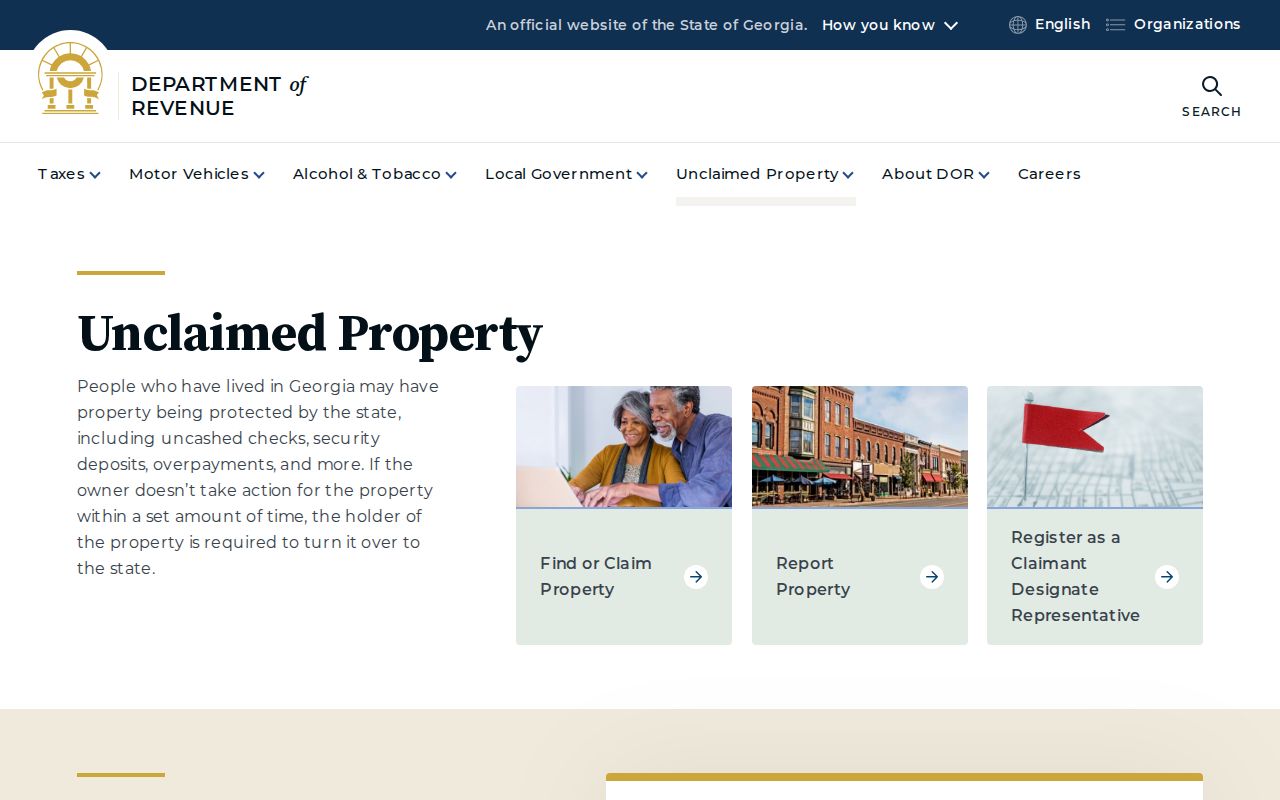
Unclaimed-property results may supply a dated affiliation clue, but they do not replace a deed, directory entry, or proof of residence.
Match Henry County Past Households
Ownership is only half of a past-residents search. The verified McDonough telephone books cover March 1974, March 1975, April and December 1976, and December 1977. Broader McDonough, Hampton, and Stockbridge holdings are documented for 1973, 1974, 1980, 1982, 1983, 1984-85, and 1987. These are incomplete runs. A telephone entry can safely support a subscriber's surname or given name or initial, street address, and telephone number. It should not be expanded into unverified occupation, spouse, or owner status.
- Copy the telephone listing exactly, including initials, exchange, street spelling, and edition date.
- Compare nearby editions and mark each gap rather than assuming continuous presence.
- Pair the listing with the closest deed, tax, newspaper, probate, or obituary record.
- For 1850 through 1950, compare the nearest public census schedule and its household members or district.
The census is a ten-year snapshot. It does not prove that a family stayed for the whole decade. Likewise, a person can be absent from a telephone book because the service was unlisted or held in another name. The collections and their scan limits are described more fully in the Henry County city directories material.
Map Earlier Henry County Residents
Sanborn fire-insurance maps add the building layer for McDonough in 1905, 1911, and 1923. They show footprints, materials, uses, openings, and street form. They do not name occupants. A structure that first appears between two editions can bracket a construction period, but permits or deeds are needed to narrow it. Match the map through street names, nearby buildings, courthouse-square context, and the land record.
The digitized Henry County Weekly supplies obituaries, church and club notices, estate notices, businesses, and legal notices from 1892 to 1923. Search surnames in more than one form because OCR, the text made by scanning print, can misread old type. A 1909 issue even printed an official McDonough and Henry County directory of officers, courts, justice districts, and meeting days.
Geography needs care. Stockbridge shifted roughly one mile south in 1882 for the railroad. County lines also changed after Henry County's creation. A different place label may reflect a moved town, later border, or postal convention rather than a household move. Follow the legal description before declaring that a household changed addresses.
Close Henry County Resident Gaps
When a person vanishes from deeds or directories, probate and newspapers can explain the break. Henry Probate Court keeps estates, wills, administrations, and guardianships, but no verified public name portal was found. Use the counter or request channel. The Brown House Family Research Library offers will-book surname indexes, a McDonough cemetery grid, local papers, census microfilm, family histories, land-lot maps, and subscription databases for on-site research.
Federal court material is a separate channel. The PACER access service can locate Northern District of Georgia cases when a known person or property matter moved through federal court.
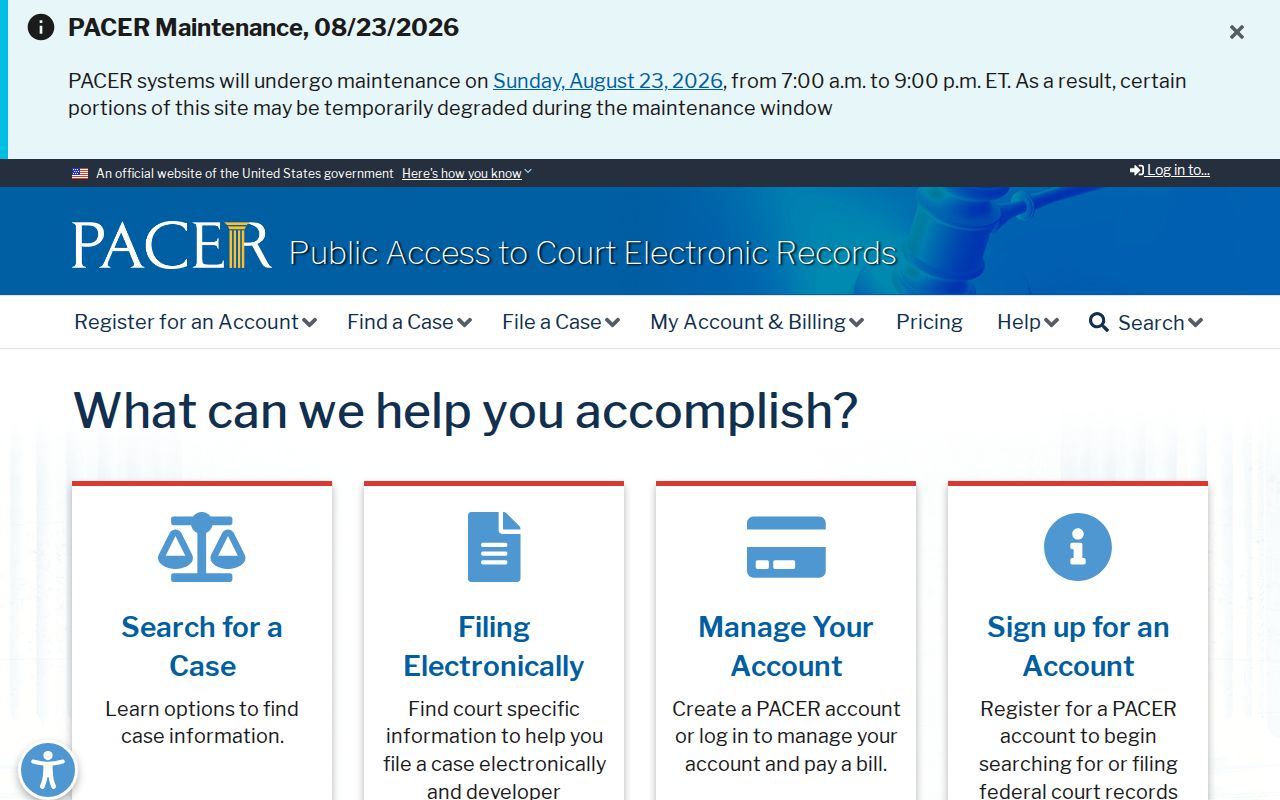
A court hit identifies a case role and date, not a home address by itself. Tie it back to the known parcel, party, or book-page reference.
For county and municipal permit or certificate-of-occupancy material, no verified public countywide portal was found. The Henry County records-routing page identifies the proper custodian. Ask for existing records within an address and date range. Georgia agencies generally must produce them when practical within three business days or provide a written response and timetable. They need not create a new report.
Use Previous-Resident Records Lawfully
Past residents research works best as family history, estate research, or careful study of a house. Protected data is a real boundary. Georgia's address-confidentiality program under O.C.G.A. §§50-18-150 et seq. protects qualifying victims who change residence and designate the Secretary of State for mail and service. Sealed records, restricted vital certificates, protected voter addresses, utility accounts, and private household data should not be treated as gaps to defeat.
A new Georgia records measure also helps explain the custodian route. Review the official legislation page for Act 276 before relying on its records provisions.
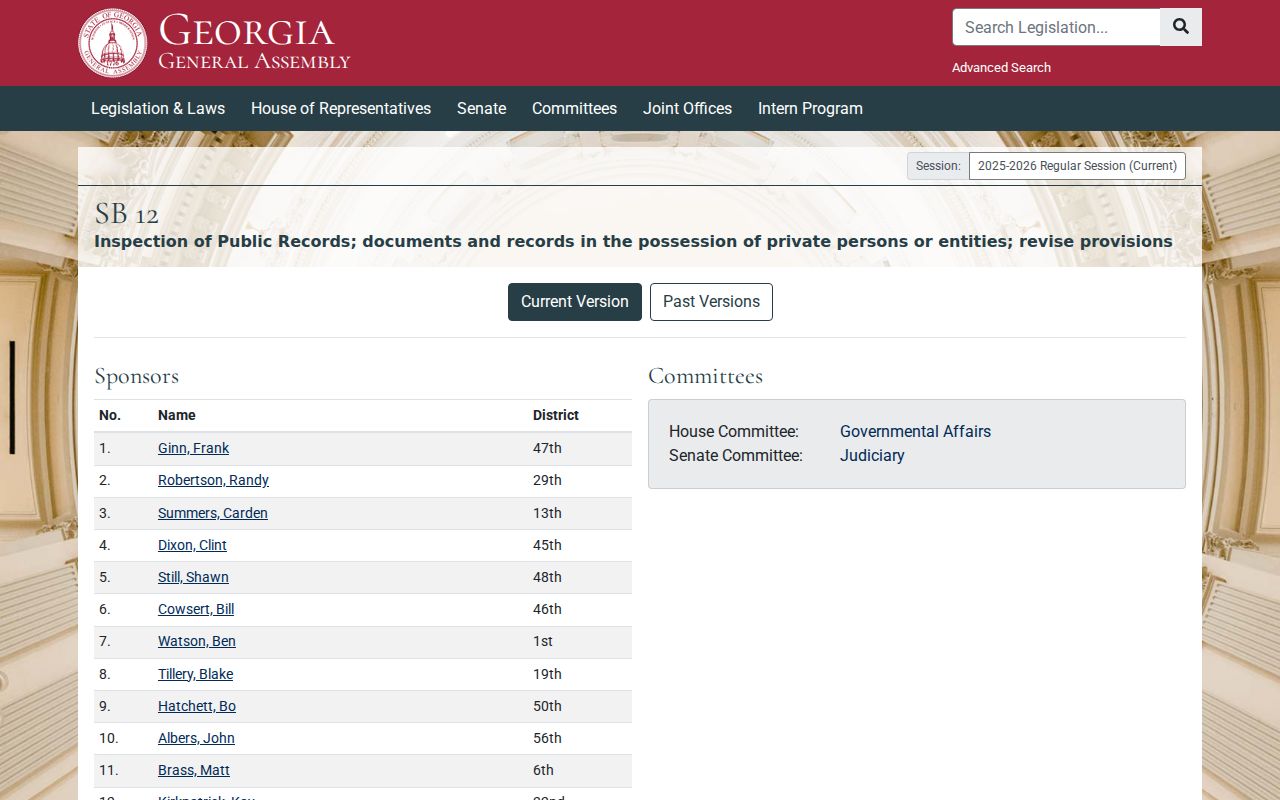
The measure clarified that requests go to the agency or designated custodian and addressed agency records held by contractors within retention or agreement periods.
Lawful use. Use Henry County previous-resident records for history and legitimate personal research. Never use them to track, threaten, or harass a living person.